
Radon in Ontario: What Every Homeowner Should Know

Here at Walnut Ridge Builders a healthy family starts with a healthy home
The Invisible Risk Lurking Beneath Ontario Homes
When homeowners think about indoor air quality, they often focus on dust, mold, or allergens. However, one of the most significant health risks found in Ontario homes is something you can't see, smell, or taste: radon gas.
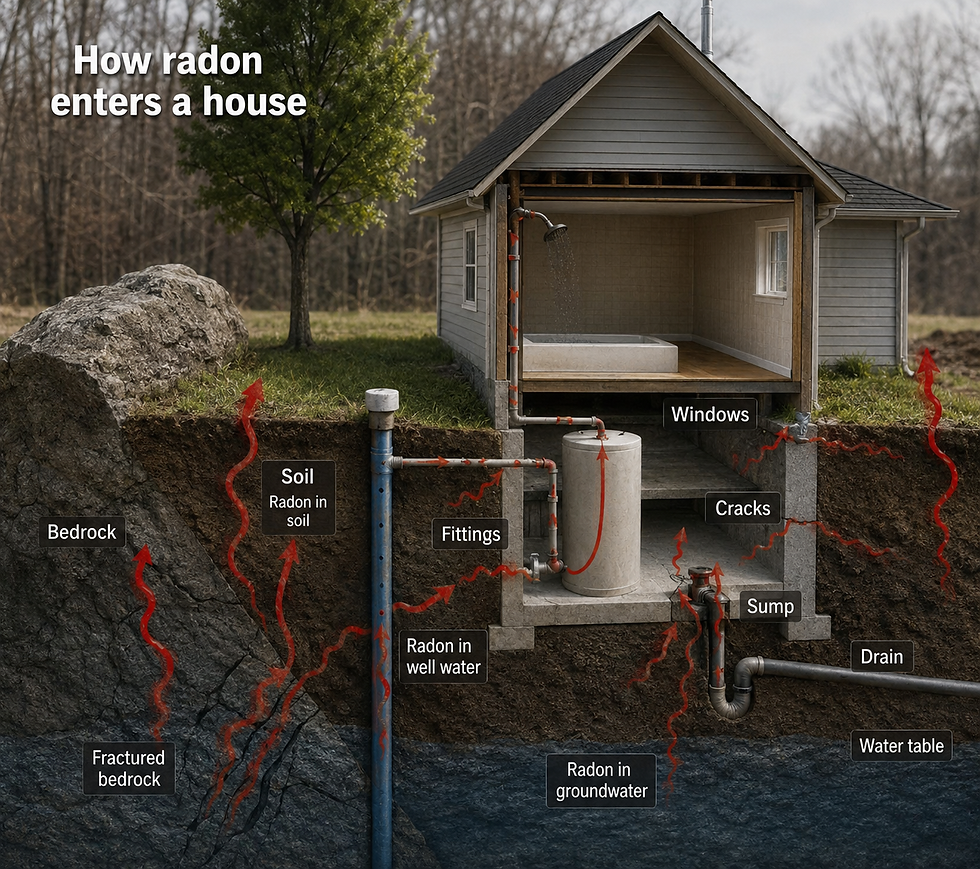
Radon is a naturally occurring radioactive gas that forms when uranium breaks down in soil and rock. It can enter homes through foundation cracks, sump pits, floor drains, and other openings in contact with the ground. Once inside, radon can accumulate to dangerous levels without any visible warning signs.
Why Radon Matters
According to Health Canada, radon is the leading cause of lung cancer among non-smokers and the second leading cause overall after smoking. Long-term exposure to elevated radon levels significantly increases the risk of developing lung cancer.
Because radon is invisible and odorless, the only way to know if your home has elevated levels is through testing.
Radon in Ontario
Ontario's geology and climate create conditions that can lead to elevated radon levels in many regions of the province. While some areas are known to have higher concentrations than others, radon can be found in homes anywhere in Ontario.
In fact, two neighboring homes built at the same time can have drastically different radon levels. Factors such as soil composition, foundation design, construction quality, and ventilation patterns all play a role.
This means that every homeowner should consider testing, regardless of where they live.
How Radon Enters a Home
Radon typically enters through:
Foundation cracks
Construction joints
Sump pits
Floor drains
Utility penetrations
Crawl spaces
Gaps around service pipes
As warm air rises within a home, it can create a slight vacuum effect that draws soil gases, including radon, into the building.
Testing Is the Only Way to Know
Health Canada recommends long-term radon testing for a minimum of 91 days during the heating season. Short-term tests can provide preliminary information, but long-term testing offers the most accurate picture of annual exposure.
The current Health Canada guideline recommends action if radon levels exceed 200 becquerels per cubic metre (Bq/m³).
Homeowners can purchase radon test kits, hire certified radon professionals, or work with qualified indoor air quality specialists.

What Happens if High Radon Levels Are Found?
The good news is that radon problems can usually be corrected effectively.
The most common solution is a mitigation system called sub-slab depressurization, which uses a fan and vent pipe to safely redirect radon gas from beneath the home to the outdoors before it can enter living spaces.
A properly designed mitigation system can often reduce radon levels by 80% to 99%.
Other improvements may include:
Sealing foundation cracks and openings
Improving ventilation
Addressing crawl space conditions
Installing radon-resistant features during construction
Radon and New Home Construction
Building codes continue to evolve to address radon concerns in new homes. Many modern homes include rough-ins or radon-ready features that make future mitigation easier if elevated levels are discovered.
For builders and homeowners alike, incorporating radon-resistant construction practices can be a smart investment in long-term health and safety.
Protecting Your Family
Because radon cannot be detected without testing, many Ontario homeowners are unaware of their exposure risk. Testing is affordable, straightforward, and provides valuable information about the safety of your indoor environment.
If elevated levels are found, effective mitigation solutions are available to help protect your family and improve indoor air quality.

The Bottom Line
Radon is a serious but manageable health risk in Ontario. Every home has the potential to contain elevated radon levels, regardless of age, size, or location. Testing is the only way to know your home's radon level, and mitigation solutions are highly effective when needed.
For Ontario homeowners, understanding radon is an important step toward creating a healthier and safer home environment.


Comments